
Waterproof vs Anti-Slip Coating Malaysia
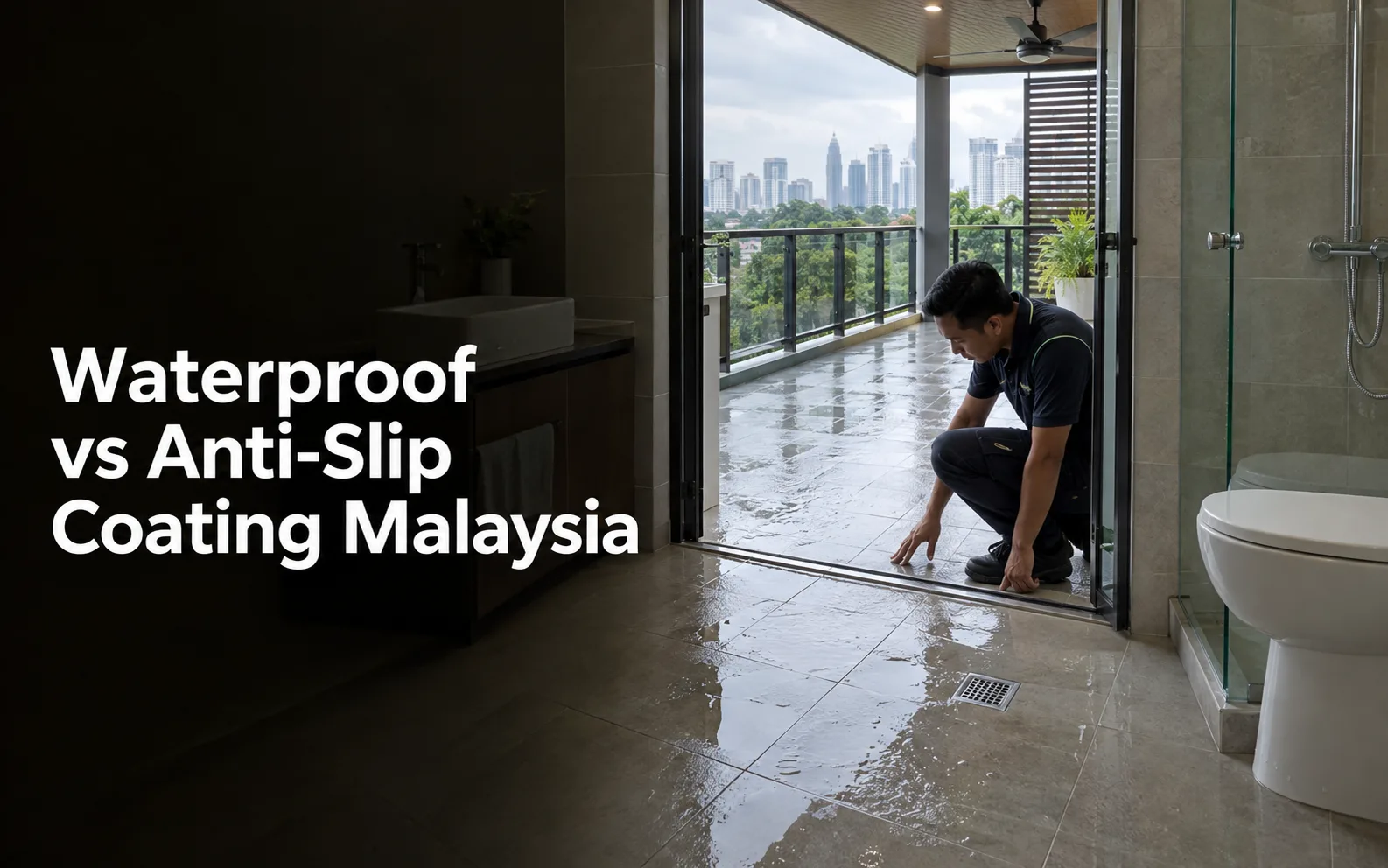
“Waterproof” and “anti-slip” are often used together, but they solve different problems. Waterproofing manages water penetration. Anti-slip treatment improves traction when people walk over a wet or smooth surface.
Knowing this difference helps homeowners, facility managers and contractors choose the right waterproof and anti-slip coating for bathrooms, balconies, kitchens, ramps and commercial wet areas in KL and Selangor.
Waterproofing and anti-slip: different jobs
Waterproofing
Waterproofing reduces water entering a substrate, wall, slab or joint. It is relevant when you see seepage, damp ceilings, leaking bathrooms, failed joints or water damage below a wet area.
Anti-slip treatment
Anti-slip treatment increases friction between footwear or bare feet and the floor surface. It is relevant when tiles feel slick after bathing, mopping, rain, pool splashes or oil exposure.
One does not automatically replace the other. A waterproof floor can still be slippery. A treated floor can still leak if cracks, joints or membranes have failed.
Which floor problem do you have?
| Sign | Likely priority | Next step |
|---|---|---|
| Floor feels slick when wet | Anti-slip assessment | Test wet grip and tile suitability |
| Ceiling below bathroom is damp | Waterproofing investigation | Trace leak and inspect joints or membrane |
| Balcony leaks after rain and feels slippery | Both may be needed | Assess drainage, waterproofing and surface grip |
| Kitchen has oily near-misses | Anti-slip plus cleaning review | Degrease, improve routine and test floor |
| Loose or cracked tiles | Repair first | Stabilise surface before either system |
Do not paint over active water damage or use a rough coating to hide a structural leak. Diagnose first.
When a combined system makes sense
Bathrooms, balconies, ramps, pool surrounds and commercial wet areas may need both water management and safer walking surfaces. Nano Step's POLYMAX waterproofing service combines anti-slip and waterproofing properties in one quartz coating system where the surface and project requirements suit it.
For existing tiles where leakage is not the main issue, a professional anti-slip treatment for tiles may be the more focused intervention. The correct choice depends on substrate condition, water path, tile type and expected traffic.
Assessment questions for Malaysia properties
Before choosing an anti-slip coating in Malaysia, ask:
- Is water entering the substrate, or only sitting on top of the tile?
- Does the slip happen only when wet, or also when dry and greasy?
- Are grout lines, joints, drains and wall-floor edges intact?
- Will the area face rain, UV, pool chemicals, oil or heavy foot traffic?
- Can work be staged without affecting residents, staff or customers?
These answers prevent over-specifying a coating and help a contractor plan preparation, application and testing properly. Read more about commercial anti-slip flooring for busy premises or request a free inspection.
Frequently Asked Questions
Does waterproofing make tiles non-slip?
No. Waterproofing controls water movement; it does not automatically provide wet-floor traction. A separate anti-slip assessment may be needed.
Is anti-slip treatment a waterproofing repair?
No. It addresses surface grip. Leaks, failed membranes and water entering the structure require waterproofing diagnosis and repair.
Can a bathroom receive both systems?
Potentially. The floor, substrate, joints, drainage and source of the problem must be inspected first. The systems should be selected as one coordinated plan.
What should I do about a slippery floor in KL or Selangor?
Photograph the surface, note when it becomes slippery and check for visible leaks or damaged tiles. Then arrange a professional assessment before choosing an anti-slip contractor in Malaysia.
Final Thoughts
Start with the failure you need to fix: water entering the structure, unsafe surface grip, or both. A clear assessment saves unnecessary coating, repair cost and downtime. Contact Nano Step for a floor review in KL and Selangor.