
N9 Childcare: Reopen Washrooms Safely
When a contractor finishes washroom floor work, a childcare operator still has a decision to make: is the room ready for children and staff to use? Application completion is one milestone. Product conditions, access, removed equipment and an agreed adult inspection belong in the reopening decision too.
This checklist is for Negeri Sembilan TASKA operators and managers coordinating floor work. It focuses on release and handover, rather than everyday cleaning. Adapt it with your contractor and the people responsible for your facility's safety and operating requirements.
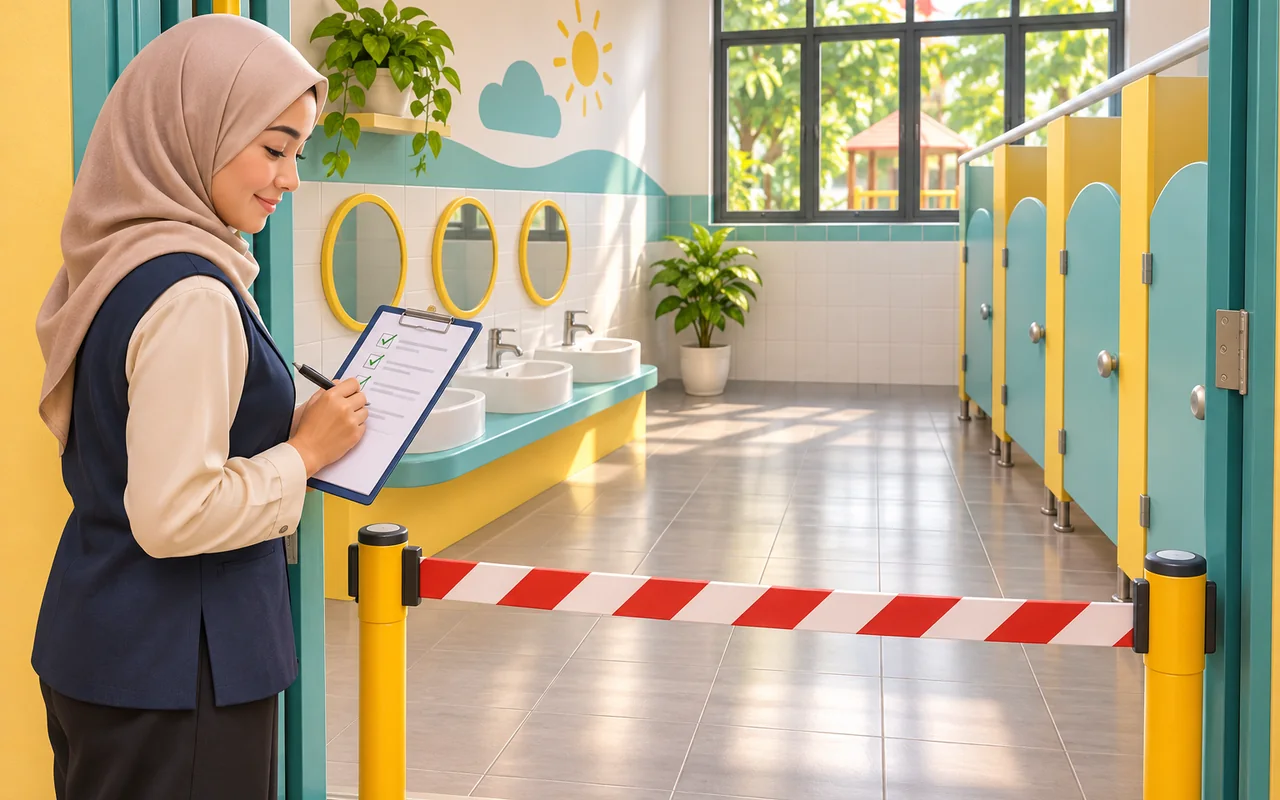
Illustration; not a Nano Step client project.
Set the release conditions before booking
Ask the contractor what preparation, drying or curing and final checks apply to the proposed method on your actual floor. Get these in writing. A general claim that work takes a few hours is not a reopening instruction for every product or site.
Agree who will decide that the conditions are satisfied and who can remove the access restriction. The centre manager should know which information must be received from the contractor and which checks remain the centre's responsibility.
Malaysia's JKM TASKA registration guidance includes technical-agency support and floor-plan information in its registration checklist. A floor treatment does not replace those wider requirements. Ask the responsible agencies about any implications of proposed changes rather than treating a contractor's completion note as regulatory approval.
Keep children out of the work zone
Plan how the room will remain inaccessible during work and inspection. A small warning sign should not be the only control relied on where young children could enter. Have the manager review the actual restriction and supervision arrangement.
Confirm an appropriate alternative toilet and handwashing arrangement before scheduling the closure. The arrangement must fit the centre's needs and requirements; an improvised route across another active work area is not a useful contingency.
The commercial anti-slip page explains floor assessment. Share the childcare setting and closure constraints at the start so the proposed scope reflects how the room is used.
Inspect the empty room with adults only
SafeWork NSW's slip-and-trip guidance identifies surface changes, contaminants, obstructions and maintenance as relevant hazards, and includes restricting access among control options. These are technical prompts; Australian regulatory terminology does not establish Malaysian compliance.
Use an adult inspection before children return. The following is a suggested release record:
| Check | Record before release |
|---|---|
| Contractor's conditions | Which requirements were met and who confirmed them |
| Work boundary | Treated area and any untreated transition |
| Tools and products | Removed from the room and secured appropriately |
| Surface and fittings | Any residue, damage, loose item or unresolved defect |
| Access | Doorway and route clear for the intended use |
| Handover | Responsible staff received instructions and next actions |
If a check cannot be confirmed, keep the room restricted and resolve the issue with the responsible person. Do not ask a child to try the wet floor or use first attendance as a test of readiness.
Check the transition beyond the washroom
Include the doorway and adjoining floor in the inspection scope. Ask whether work or cleaning has affected that transition and whether any temporary covering or equipment remains. The contractor's work boundary and the centre's reopening boundary may be different: children still need an appropriate route to the room.
If surface traction remains a concern, request the agreed professional assessment before release. Our bathroom service information provides context for suitable existing floors, but a childcare setting needs its own scope and operating controls.
Give staff a clear first-session handover
Tell the staff supervising the room what changed, what care instructions apply and who receives reports. Keep any product-specific instructions where the responsible adults can find them. Do not leave the only copy with an off-duty manager or in the contractor's messaging thread.
During the first normal use period, have staff observe the route as part of their usual supervision. Record issues such as a recurring wet patch or an obstruction and act through the centre's established process. Observation follows a completed release decision; it does not substitute for one.
Keep the contractor's record, centre inspection and any follow-up actions together. That makes the next manager or maintenance worker less dependent on memory.
Frequently Asked Questions
Can children return when the floor feels dry?
Touch alone does not confirm that all method-specific and centre release conditions have been met. Use the agreed written checks.
Does treatment make supervision unnecessary?
No. Supervision, spill response, maintenance and appropriate facility arrangements remain part of operating the washroom.
What if the contractor finishes late?
Keep the planned restriction and approved alternative arrangement in place. Resolve the remaining checks rather than reopening to meet an assumed time.
Plan the visit and handover
Review Negeri Sembilan coverage, then contact Nano Step through WhatsApp with your town, postcode, washroom photos and available closure window. Confirm the scheduled outstation visit, assessment scope and release information before work is booked.