
N9 Ablution Areas: Separate Wet and Dry Routes
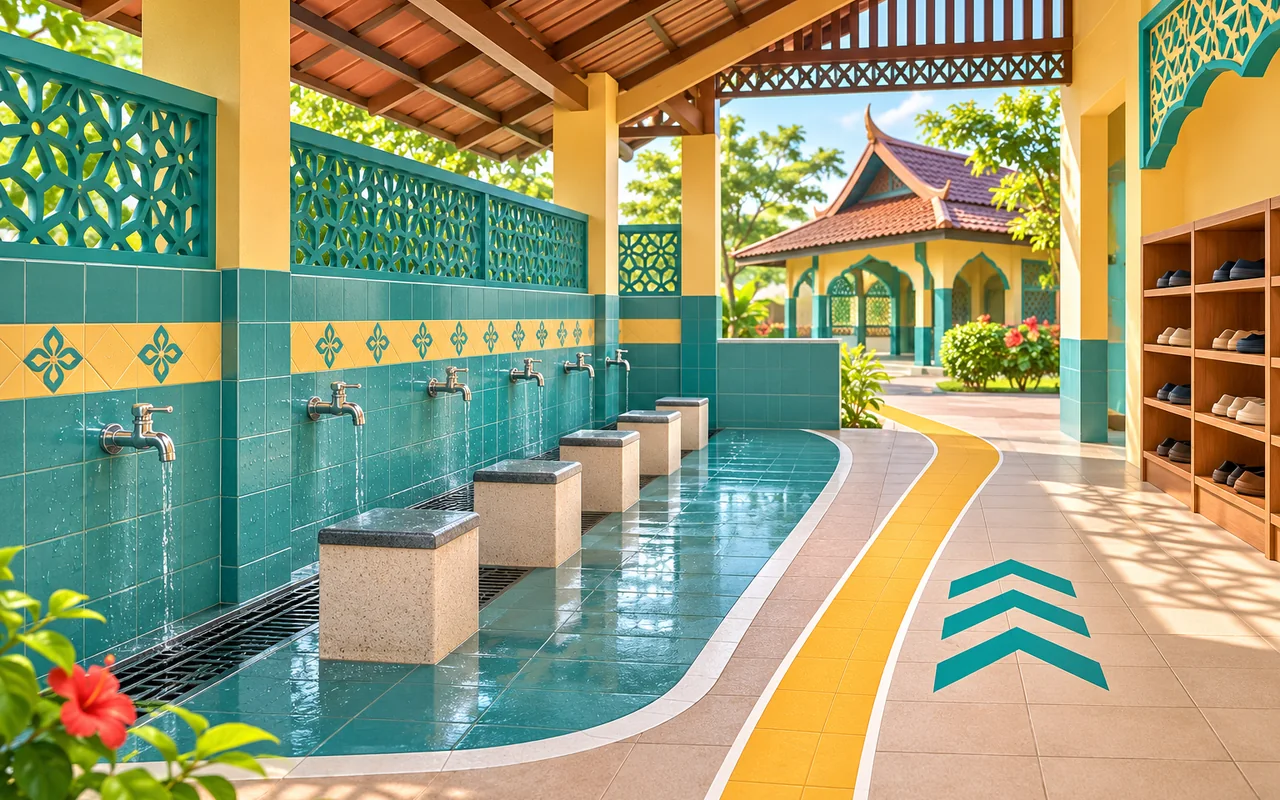
An ablution area has an obvious wet zone around the taps. The less obvious problem is the route people take afterward: past seats, through a doorway and toward the dry prayer-area approach. Treating only the tiles below the taps can leave that transition outside the plan.
For mosque, surau and shared-facility managers in Negeri Sembilan, begin with the route rather than a product. Identify where water should stay, where it travels and how people move between the two areas. Then decide which operational, drainage or surface questions need professional assessment.
Illustration; not a Nano Step client project.
Draw the wet-to-dry journey
On a simple plan, mark the taps, seats, drains, doors and storage. Add the usual entry and exit path, along with the footwear boundary where one exists. Identify any point where people cross between incoming and outgoing users or have to step around stored items.
Observe the area during normal operation from a safe position. Record where splash reaches and where moisture is carried beyond the expected wet zone. Do not ask worshippers to walk over a suspect patch to prove it is slippery.
Distinguish observations from assumptions. A damp doorway may involve splash, water carried on feet, a leak or cleaning activity. Each possibility points to a different assessment question.
Manage the source as well as the surface
The UK's HSE slip-prevention overview treats contamination, flooring and housekeeping as parts of slip prevention. Its workplace guidance on floor conditions also discusses drainage where floors become wet. These are general technical principles, not mosque-design rules or a Malaysian compliance assessment.
For your facility, prepare a list of issues to investigate:
- Water escaping the intended washing area.
- A drain that is blocked, poorly placed or slow to clear.
- A route that takes users directly through another person's splash zone.
- Objects stored where people need to place their feet.
- A wet-to-dry boundary that is unclear or impractical to follow.
Ask the responsible maintenance or building professional which repairs or layout changes are appropriate. Surface treatment cannot redirect a tap, clear a drain or change a doorway's position.
Define what “dry route” means in practice
A dry route is an operational aim, not a promise that no moisture will ever reach it. Decide who checks the transition and what happens when it becomes wet. Include ordinary use, cleaning periods and the busier arrival and departure pattern around prayer times.
Review proposed controls with the people who maintain and use the facility. A route that looks tidy on a plan may force an awkward detour or create congestion. Keep any access arrangement respectful and workable for users with different mobility needs.
Do not add loose coverings or improvised barriers without assessing the new obstruction and maintenance questions they introduce. Agree a specific plan rather than accumulating temporary items along the path.
Specify a barefoot-use assessment
Tell the floor assessor that this is an ablution route and explain the actual use conditions. Identify the wet area, transition and adjoining dry surface separately. Ask how the chosen assessment method addresses those conditions and whether additional specialist input is needed.
For suitable existing surfaces, professional anti-slip treatment can be considered as part of the plan. Compatibility, preparation and the proposed boundary still need checking. A sample from one tile does not automatically establish suitability throughout the facility.
Our commercial service page explains the wider assessment process. Keep drainage repairs, access decisions and surface work as distinct scope items so none disappears inside a broad “anti-slip” instruction.
Plan closures around use and release conditions
Agree the work area and any available alternative ablution facilities before announcing a closure. Confirm the contractor's actual preparation and release requirements; do not assume that a gap between prayer times is long enough.
Name the facility representative who will inspect the area with the contractor. Before reopening, confirm the agreed work is complete, tools and residues are removed, access is clear and any required checks have been satisfied. Give the maintenance team the care instructions and a way to record recurring wet patches.
Frequently Asked Questions
Should only the floor below the taps be assessed?
No. Include the route toward the dry area, thresholds and other places where water travels. The final treatment boundary should follow the findings.
Can treatment solve standing water?
It does not correct the cause of pooling. Drainage and maintenance issues need their own investigation.
Can work always finish between prayer times?
No fixed window suits every method or floor. Confirm conditions and alternative facilities before committing to a schedule.
Prepare a Negeri Sembilan assessment
Check Negeri Sembilan coverage, then send a WhatsApp enquiry with the town, postcode, route photographs and facility-use times. Visits are scheduled from the Cheras base; confirm availability and scope before planning a closure.