
Swimming Pool Anti-Slip Treatment in Malaysia
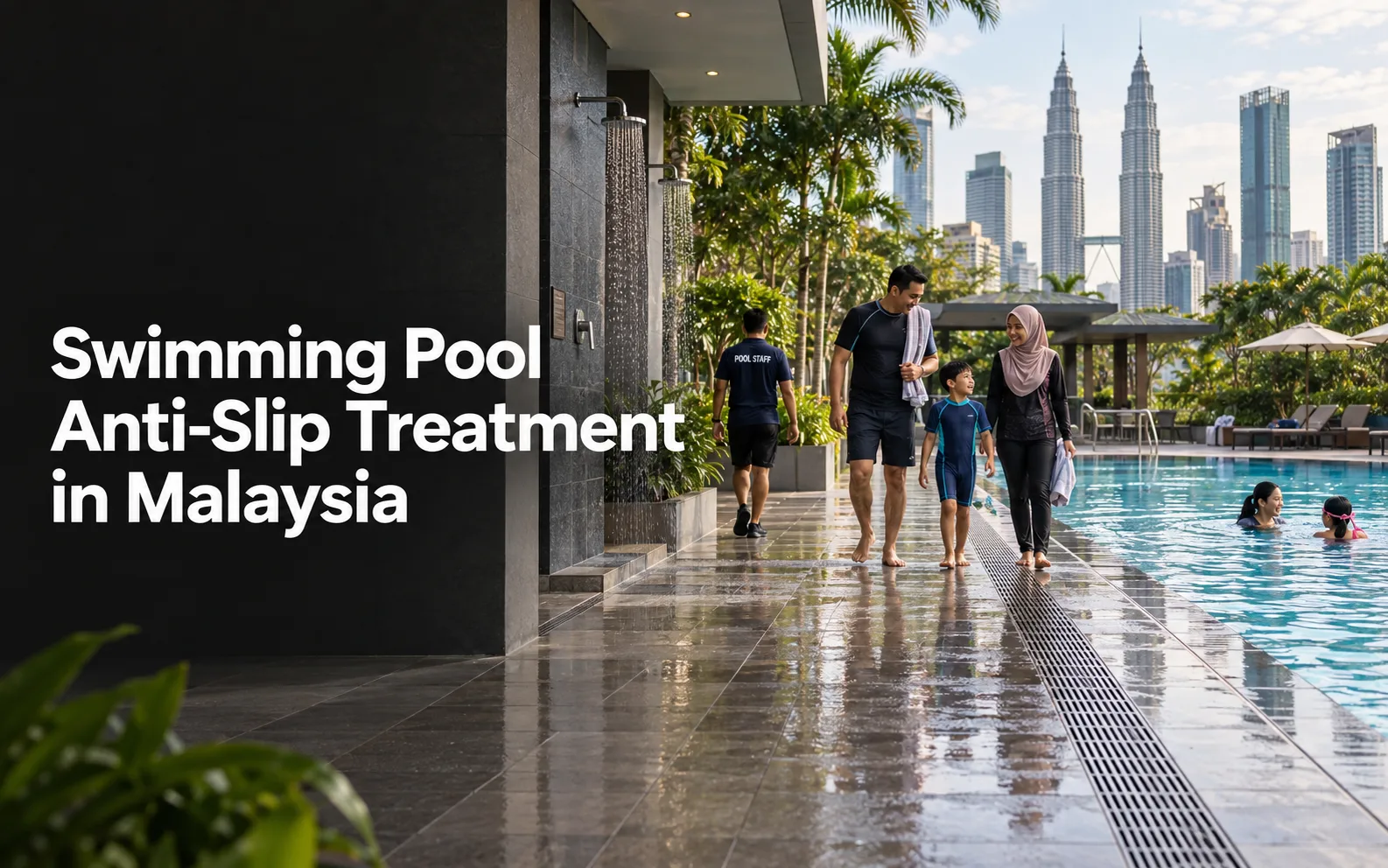
Pool decks, shower routes and changing areas are wet by design. In Malaysia, heat, rain, algae, sunscreen and constant foot traffic can add another layer of slip risk. Children may run, older visitors may move cautiously, and staff must manage the area throughout the day.
Swimming pool anti-slip treatment helps operators address existing slippery surfaces without immediately removing sound tiles. It suits a risk review for private pools, swim schools, hotels, condominiums, gyms and public facilities in KL and Selangor.
Where poolside slips start
- Pool edges where water is repeatedly splashed.
- Showers and ramps where soap residue remains.
- Changing-room entrances where wet feet meet polished tiles.
- Covered walkways where moss or grime grows between cleaning cycles.
- Steps and slopes where a small loss of grip becomes harder to recover from.
Cracked, loose or hollow tiles need repair first. Treatment improves surface grip; it does not repair the substrate or correct poor drainage.
Pool deck safety checklist
Inspect wet routes, not only the pool surround
Walk the complete route from entrance to pool, shower, toilet and changing room. Mark areas that stay wet, receive direct sun, collect dirt or become crowded during lessons.
Check cleaning and water flow
Confirm that drains clear quickly. Remove body oils, sunscreen residue and grime using the facility's approved cleaning process. A clean floor can still be slippery if its surface has insufficient wet traction.
Test the existing tile
Ceramic, porcelain, stone and concrete react differently. A professional assessment should confirm suitability and include a small test area before a wider application.
Which solution fits a pool facility?
| Situation | Practical response |
|---|---|
| Loose or cracked tiles | Repair or replace before surface treatment |
| Small wet entrance zone | Improve drainage, cleaning and local grip |
| Large sound tiled deck | Assess for professional anti-slip treatment |
| Water leakage through structure | Consider waterproofing investigation separately |
| High-traffic commercial pool | Stage work outside lessons and operating hours |
The right anti-slip treatment for tiles should preserve the facility's finish while improving traction under wet conditions. Product choice, preparation and post-treatment testing matter as much as the product name.
How Nano Step approaches poolside work
- Inspect tile type, drainage, contamination and traffic pattern.
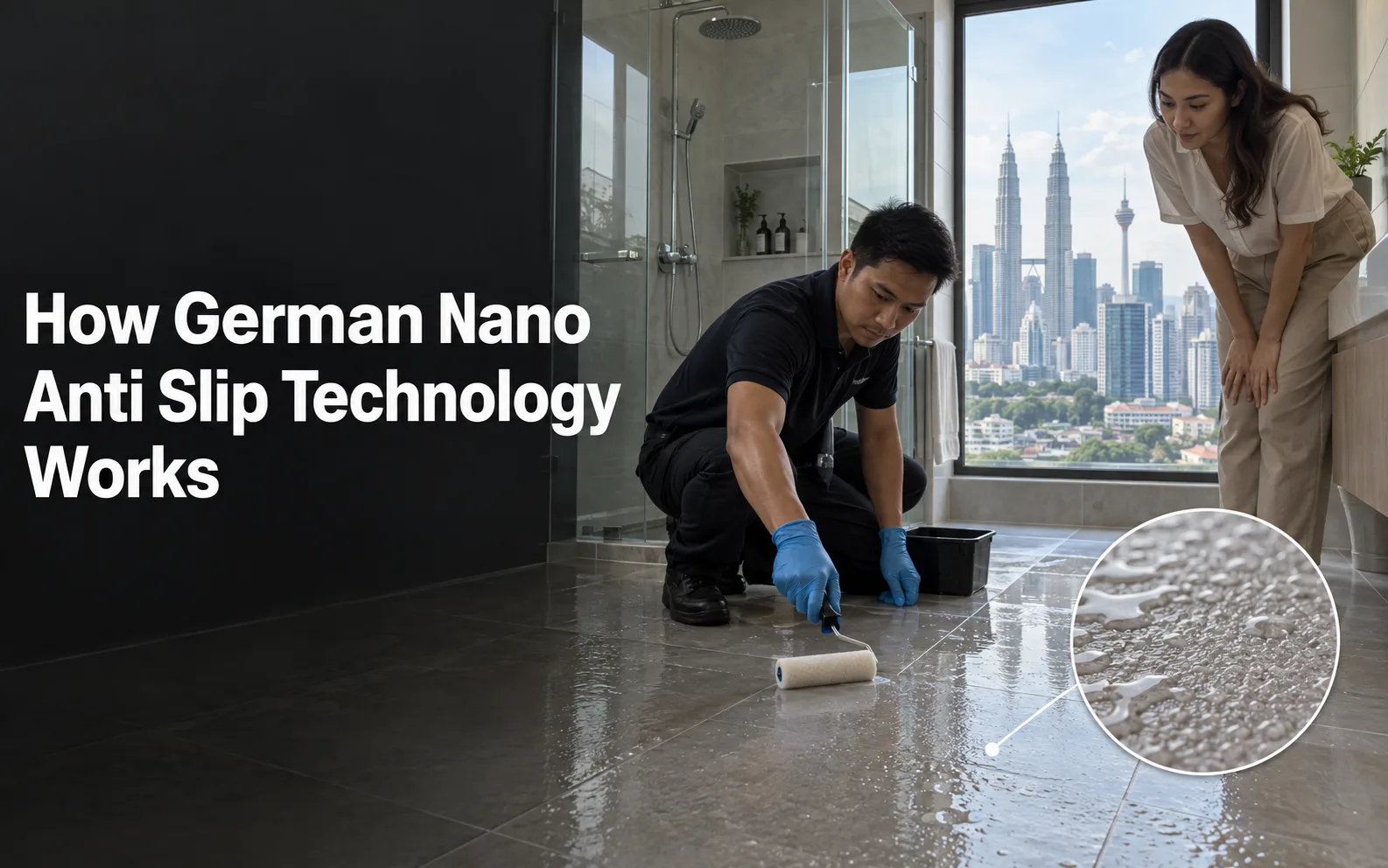
- Demonstrate the difference on a small area.
- Clean and prepare the selected zones.
- Apply the recommended treatment.
- Re-test wet grip and explain cleaning guidance.
For commercial facilities, the work plan can separate pool deck, shower and walkway zones to reduce disruption. See commercial anti-slip flooring options and completed projects before arranging a site visit.
Frequently Asked Questions
Does pool treatment work on wet tiles?
The floor must be prepared and treated under controlled conditions. The suitability check identifies contamination, surface type and drying requirements before application.
Will treatment change pool tile appearance?
The recommended Nano Step system is designed to preserve colour, shine and texture. A test patch lets the operator approve appearance and grip before wider work.
Is pool treatment only for commercial facilities?
No. Home pools, condominium decks and private wet areas can also be assessed. Risk level, tile condition and the amount of traffic determine the suitable approach.
Does treatment replace pool rules and supervision?
No. Signs, supervision, drainage, cleaning and suitable footwear remain important. Surface treatment is one part of a complete pool safety plan.
Final Thoughts
Pool safety needs more than a warning sign. Check wet routes, repair damaged areas, improve drainage and test the floor where people actually walk. Book a free assessment for swimming pool anti-slip treatment in KL or Selangor.